
Do you feel like your lessons don’t match how people talk on the streets? You’re not alone. Learning Everyday English Slang for Beginners makes you sound more natural and confident.
This guide is your clear roadmap to bridge the gap between classroom lessons and real-life language. You’ll learn to use casual expressions naturally. This way, you won’t feel like you’re forcing it.
You’ll pick up on subtle things that make your talk feel real. Building your vocabulary this way helps you connect better with others. Soon, you’ll speak like a local with ease.
Understanding the Role of Slang in American Culture
Language changes and grows through everyday talk. In the U.S., slang connects people, showing what we value and find funny. An American slang guide helps you understand what people really mean.
Why Slang Matters for Fluency
To really speak English well, you need more than just words from a dictionary. People use slang to share feelings and connect fast. Using slang shows you get the local way of talking.
Here’s why slang is good for you:
- It makes you sound more real, not like a book.
- It lets you join in on conversational English tips that locals use every day.
- It helps you make friends by showing you get cultural jokes.
«Language is the road map of a culture. It tells you where its people come from and where they are going.»
Distinguishing Between Formal and Informal Contexts
Slang is great for hanging out or chatting at a coffee shop. It makes your talk friendly and fun. But, be careful where you use it.
In work or school, slang can seem too casual. It’s best to keep it for relaxed times. Think about who you’re talking to before using slang. This way, you stay clear and respectful.
Getting Started with Everyday English Slang for Beginners
Starting to learn Everyday English Slang for Beginners needs a plan. Don’t try to learn too much at once. Focus on making learning a regular habit.
A good plan helps you use new words every day. This way, you won’t feel too stressed.

Identifying Your Learning Goals
When you start learning English slang, know what you want. Do you want to sound better in social situations? Or understand movie references?
Having clear goals helps you see how far you’ve come. It makes learning more fun.
Try to learn a few new words each week. This way, you’ll remember them better. Learning a little bit each week is better than trying to learn too much.
Selecting Reliable Resources for Slang Acquisition
Finding good slang learning resources is important. Look for things made by native speakers. This includes podcasts, YouTube, and TV shows.
These sources show how people really talk. They help you learn slang in context.
Stay away from old books and dictionaries. Slang changes fast. Choose media that shows how people talk today. Consistency is key, so pick things you like to keep learning fun.
Mastering Common Social and Greeting Slang
Starting a conversation in the United States often relies on specific informal English phrases. These phrases help you connect with people in your daily life. Using social slang for beginners makes you sound like a native speaker.
Essential Phrases for Casual Conversations
In a casual English conversation, Americans use short, punchy expressions. These common American idioms and greetings are key to social interactions.
«Language is the road map of a culture. It tells you where its people come from and where they are going.»
Here are some popular openers for your next chat:
- What’s up? – A common way to say hello or ask what someone is doing.
- How’s it going? – A friendly question about your day.
- How have you been? – Used when you haven’t seen someone for a while.
How to Respond to Informal Greetings
Knowing how to reply is key to keeping the conversation flowing. The table below shows simple ways to handle these common social cues.
| Greeting | Standard Response | Casual Alternative |
|---|---|---|
| What’s up? | Not much. | Hey, not a lot! |
| How’s it going? | I am doing well. | Pretty good, you? |
| How have you been? | I have been busy. | Can’t complain! |
By practicing these informal English phrases, you’ll find social barriers fade. Remember, social slang for beginners is about being relatable. Keep your tone light and show your personality with these common American idioms.
Navigating Slang Related to Emotions and Reactions
Emotions can be strong and need special slang for emotions. Formal words are good, but vivid ones connect us better. Learning these words is key for social slang for beginners to sound natural.
Expressing Excitement and Approval
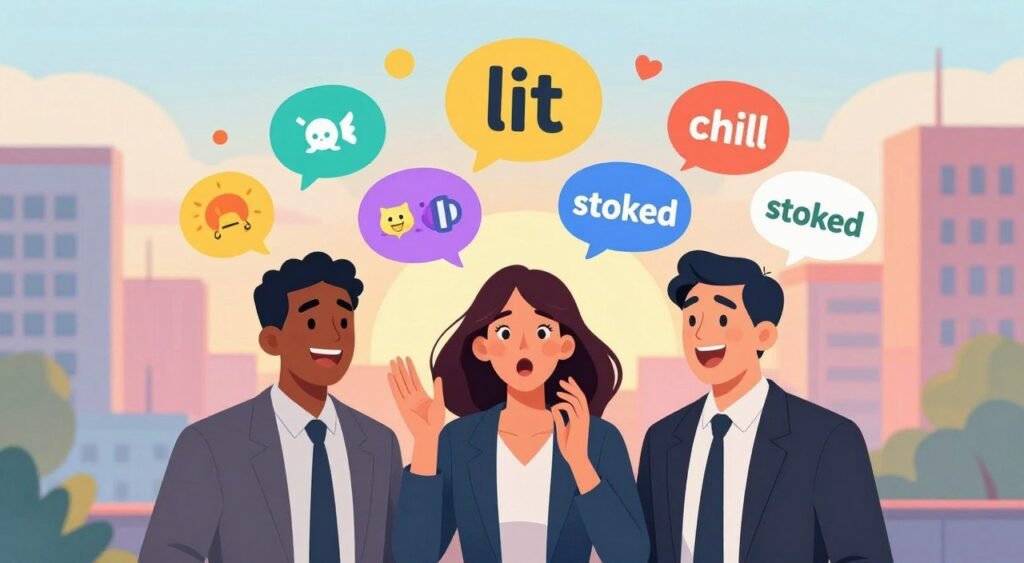
When something is awesome, people use short, strong words. A great party or cool outfit is often called «lit» or «fire.» These words show you like it a lot.
Showing you like something can also mean it’s «dope» or «sick.» Don’t worry about what they mean literally. They’re just good. Using these words shows you’re excited too.
Describing Frustration or Disappointment
Life isn’t always good, and we all face bad times. If something is unlucky, it’s a «bummer.» This word is great for any casual setting.
If someone is too upset about something small, they’re being «salty.» Poor quality things are often called «trash.» Knowing these words makes your reactions seem real and right.
Using Slang to Describe People and Personalities
You can make your stories more interesting by using fun words to talk about people. Learning these informal English phrases makes your talks more lively. It’s easier to share your stories with others when you know these words.
Terms for Friends and Acquaintances
In America, how you call your friends shows how close you are. You might call your best friend your bestie or ride-or-die. These words show you’re very loyal and have a strong friendship.
For a group of friends, you might say they’re your squad or crew. If you know someone but aren’t super close, you can say they’re an acquaintance or work buddy. Using these words helps others know how you’re connected.
Describing Character Traits Informally
When talking about how someone acts, using personality slang terms is helpful. For example, someone who is easy-going might be called chill or laid-back.
To describe someone who loves being social, you could say they’re a social butterfly. If someone needs a lot of attention, they might be called high-maintenance. These words quickly tell someone about someone’s personality without needing to explain a lot.
Applying Slang in Digital Communication and Texting
Texting and social media are fast. You type on a small screen. So, you need to be quick and clear.
This fast pace has made digital communication slang popular. It’s different from the English used in emails or school.
Common Abbreviations and Acronyms
To type fast, you use texting abbreviations. These shortcuts let you say a lot with a few letters. Knowing these acronyms makes your messages feel right.
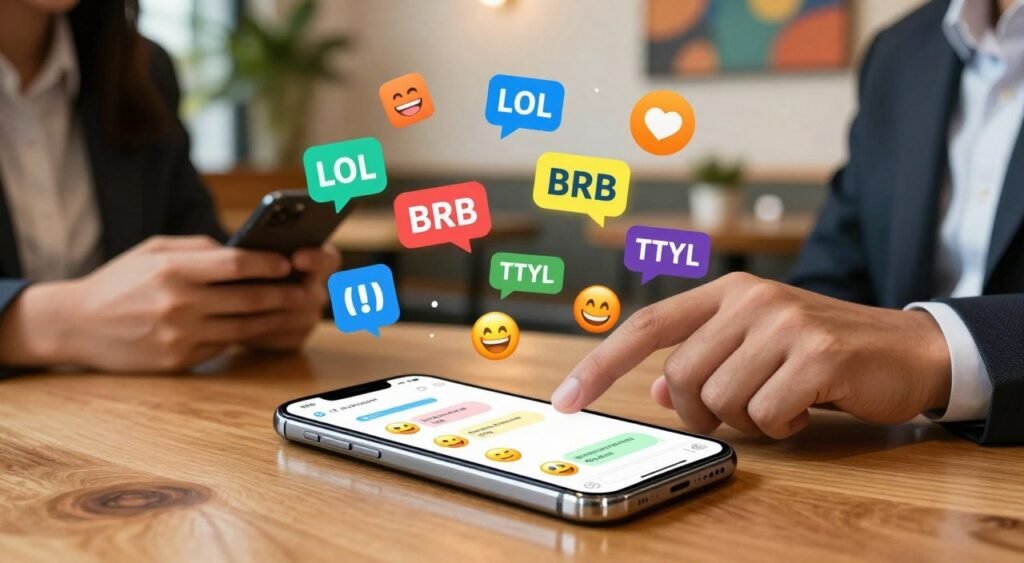
Here’s a table with key terms for online chats. Knowing these will make you better at chatting online.
| Abbreviation | Full Meaning | Usage Context |
|---|---|---|
| LOL | Laughing out loud | Used to show amusement |
| BRB | Be right back | Indicating a short break |
| BTW | By the way | Introducing a new thought |
| IMO | In my opinion | Sharing a personal view |
Understanding Tone in Text-Based Interactions
It’s hard to know the tone of a text. You can’t see body language or hear voice tone. This can lead to misunderstandings.
Using digital communication slang wisely is key. For example, typing in all caps can seem loud and mean. But, emojis and the right punctuation can make your message friendly.
Always check your message before sending. This way, you make sure it’s clear and kind.
Step-by-Step Guide to Practicing Slang Safely
Learning slang means going from just listening to using it yourself. You need a place where you can try it out without worry. Follow these conversational English tips to get better with time.
Observing Native Speakers in Media
TV shows and movies are great for learning how people talk. Watch how slang is used with body language and tone. This passive observation teaches you about the words’ meaning.
«Language is the road map of a culture. It tells you where its people come from and where they are going.»
Testing Phrases in Low-Stakes Environments
When you know a few slang terms, it’s time to practice. Use them in relaxed settings, like with a friend. This way, you can get better without feeling stressed.
Starting with Simple Affirmations
Start by adding simple words to your casual English conversation. Words like «totally» or «no worries» are easy to use. They help you get used to slang without feeling awkward.
Graduating to Descriptive Adjectives
Once you’re good with basic words, try more complex ones. Learning how to use slang correctly means knowing when to use informal words. Start with one or two new words each week to feel truly comfortable using them.
Avoiding Common Pitfalls and Misunderstandings
Even the most fluent speakers can stumble if they ignore the social nuances of American culture slang. Learning new phrases is exciting. But, it’s crucial to remember that language is deeply tied to social context. Using the wrong word in the wrong place can lead to confusion or unintended offense.

Learning how to use slang correctly requires a commitment to ongoing observation. You must be willing to adjust your vocabulary based on who you are talking to and where you are located.
Recognizing Offensive or Outdated Terms
Language evolves rapidly, and terms that were popular a decade ago may now be considered offensive or simply cringeworthy. It is important to vet your vocabulary before adding new expressions to your daily rotation. If you hear a term in an old movie or song, do not assume it is still acceptable to use in modern conversation.
When you are avoiding slang mistakes, prioritize terms that are currently in active use by your peers. If a word feels harsh or targets a specific group, it is best to avoid it entirely. Relying on neutral, widely accepted slang is a safer strategy for learners.
Reading the Room Before Using Slang
The most important skill you can develop is the ability to read the room. Before you drop a casual phrase, take a moment to assess the setting. A professional office, a formal dinner, or a conversation with someone you just met are usually not the right times for heavy slang usage.
Pay close attention to the language used by the people around you. If everyone else is speaking in a standard, formal tone, it is a clear signal that you should do the same. Adapting your speech to match the energy of your environment ensures that your message is received exactly as you intended.
Building Your Personal Slang Vocabulary
Keeping a record of slang you hear helps you talk like a native. It’s all about being consistent when you’re learning English slang. By writing down new words, you make listening active.
Keeping a Slang Journal
A journal is your own slang dictionary. Write down new words and where you heard them. Note who said it, like a friend or a movie star. This shows you when to use the slang.
Write a short definition and an example sentence. This way, you learn to use the word right. Your journal will help you speak better English over time.
Reviewing and Updating Your Usage
Language changes, and so should your words. Set times to review your slang journal. Saying the words out loud helps you remember.
Don’t be afraid to drop old slang. Using slang regularly helps you find what feels right. Stay curious and keep learning new slang to speak naturally.
Conclusion
Language changes every day, showing the lively spirit of today’s world. This American slang guide helps you connect what you learn in books to how people talk in real life.
You now have the tools to make small talk easier. You’ll learn new words by listening to NPR podcasts or watching Netflix shows. These sources give you a real look at how people talk every day.
Being consistent is key to getting better. Keep talking with native speakers and don’t worry about making mistakes. This guide is your starting point for making friends and working well with people in the U.S.
Your journey to speaking fluently is ongoing. Keep exploring how people talk informally. Every time you use a new word right, you’ll feel more confident.