
Going between the United States and the United Kingdom can feel like a new language. Even though they share a common tongue, small changes in words can cause confusion. Learning these British vs American Vocabulary Differences is key for global interactions.
Not knowing these differences can lead to communication barriers in work and social life. You might make funny mistakes or serious errors at work. Knowing these changes helps keep your message clear and professional.
This American English guide is your starting point. It helps you understand the main differences. By learning these, you can talk clearly across the ocean. Let’s see how to make sure your words are always understood.
The Origins and Evolution of Language Divergence
Why do British friends spell words differently? It’s a long story of language evolution over centuries. Looking at English language history, we see how geography and culture split a single language into two.

Historical Context of Colonial English
Settlers brought 17th and 18th century English to North America. Over time, colonies developed their own linguistic variations. The older speech forms became unique to America.
This change wasn’t sudden. It happened slowly as communities adjusted to new places. The Atlantic Ocean kept the UK and US apart, leading to different words and sounds.
The Influence of Noah Webster and Standardization
Noah Webster changed American English in the 1800s. He made spellings like «color» to show American independence. His work made American English clear and different from British.
His dictionaries helped set American grammar and spelling rules. This move defined American identity through words. It was a big step in English language history.
Modern Media and the Globalization of English
Today, the internet shapes our language. UK vs US English are still different, but global media connects them. You see many linguistic variations online, in movies, and on social media.
Even with all this exchange, the Noah Webster influence still shows in our writing and speech. English keeps changing, adapting to its users. It keeps the special tastes of the UK and US alive.
Mastering British vs American Vocabulary Differences
Learning about UK vs US English starts with noticing word changes across the ocean. This American English guide helps you understand the small changes that can confuse people. Knowing these differences helps you talk clearly and with confidence.

Recognizing Regional Dialect Patterns
Language is always changing, and regional dialect patterns are key. In the UK, local words and ways of speaking can change a sentence’s meaning. Knowing where someone is from helps you understand what they mean.
It’s important to listen to how different areas speak. For example, a word in London might mean something different in Northern England. Getting used to these differences is the first step to speaking well.
The Role of Context in Identifying Meaning
When you hear new British English terms, the conversation around them helps. The context often gives clues to what a word means. Look at the speaker’s tone and the situation to figure out if a word is used literally or in a special way.
Here’s a table showing how context changes word meanings:
| Word | American Meaning | British Meaning | Contextual Clue |
|---|---|---|---|
| Biscuit | Savory bread | A sweet cookie | Served with tea |
| Chips | Thin potato crisps | Thick-cut fries | Served with fish |
| Vest | Sleeveless jacket | An undershirt | Worn under a shirt |
| Pants | Trousers | Underwear | Worn beneath trousers |
Common Pitfalls for American Speakers
One big mistake is thinking words mean the same everywhere. Good dialect identification helps avoid awkward moments and makes sure you’re understood. Stay open to learning new words as you meet different people.
Don’t correct others based on your own way of speaking. Instead, enjoy the language’s variety. This curiosity will help you learn these differences easily.
Categorizing Common Lexical Variations
Even simple words can mean different things in America and Britain. Knowing these linguistic variations helps bridge the gap in communication. By sorting these differences, you can avoid misunderstandings.
Nouns That Change Meaning Entirely
Nouns can be tricky because they often refer to different things. For example, Americans call them pants, but in Britain, they mean trousers. In the UK, «pants» means underwear. Knowing this can prevent awkward moments.
- Chips: In the US, they are thin, fried potato slices; in the UK, they are thick-cut fries.
- Biscuit: An American expects a soft, savory bread; a British person expects a sweet cookie.
- Boot: Americans wear these on their feet, but in the UK, it is the trunk of a car.
Verbs and Phrasal Verb Distinctions
Verbs and phrasal verbs add complexity to lexical differences. For instance, Americans might «check out» a store, but Brits say «have a look around.»
Grasping these patterns makes your speech sound more natural. It’s not just about the words, but how they fit into sentences to show what you mean.
| Action | American English | British English |
|---|---|---|
| To reserve | Make a reservation | Book |
| To exercise | Work out | Train |
| To socialize | Hang out | Muck about |
Adjectives and Descriptive Nuances
Vocabulary nuances show in how we describe things. Adjectives can have different meanings based on where you are. A word that’s polite in one place might seem too formal in another.
Precision in choosing words is crucial for clear communication. By noticing these small differences, you make sure your message is understood, no matter where your audience is.
Navigating Transportation and Automotive Terminology
Knowing British automotive terminology is key for American drivers going abroad. Car mechanics stay the same, but words change between the U.S. and U.K. Being ready helps talk to mechanics or rental places.
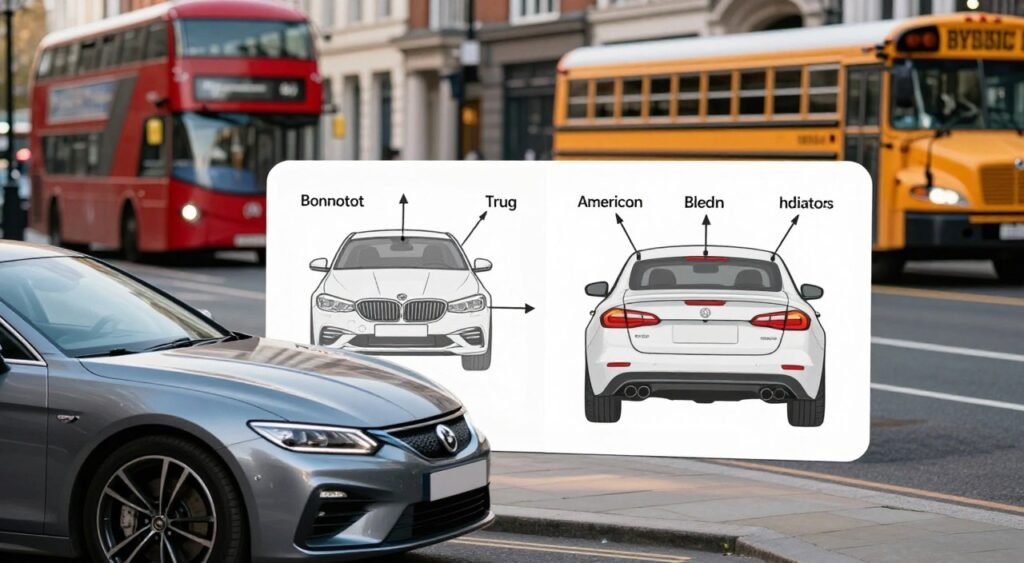
Essential Terms for Vehicle Parts
When you open your car’s front, you see the bonnet, not the hood. To find luggage space, look for the boot, not the trunk. These changes in words are common in the U.K.
«The limits of my language mean the limits of my world.»
Public Transit Vocabulary Differences
Using public transport in cities means new words. In London, you’ll ride the Underground or «Tube,» not subway. For long trips, you’ll take a coach, not a bus, which is for city travel.
Road and Infrastructure Terminology
Driving needs knowing special road terms for safety. You’ll see motorways instead of highways and roundabouts instead of traffic circles. Knowing these automotive terms helps follow signs and directions well.
| American Term | British Term | Context |
|---|---|---|
| Hood | Bonnet | Vehicle Part |
| Trunk | Boot | Vehicle Part |
| Highway | Motorway | Infrastructure |
| Subway | Underground | Public Transit |
Learning these differences makes your trip easier. Always remember these essential terms when driving or using public transport. Being prepared makes your travel stress-free.
Decoding Food and Culinary Language
Your journey through Britain starts with learning kitchen and market words. Knowing culinary language is key for grocery shopping or eating out. It lets you read menus and recipes with ease.

Grocery Store and Supermarket Terminology
In a British supermarket, many items have different names. For example, «zucchini» is called a courgette. «Eggplant» is an aubergine. Look for «spring onions» instead of «scallions» in the produce.
At the meat counter, you’ll find «mince» instead of ground beef. «Rashers» are what Americans call bacon strips. Knowing these words helps you get the right ingredients for your recipes.
Cooking Methods and Kitchen Equipment
Cooking tools have different names in Britain. A «grill» is what Americans call a broiler. The stovetop is called a «hob.» Learning these terms is important for using the local culinary language.
- Kettle: An essential appliance for boiling water, usually for tea.
- Whisk: Often called a «balloon whisk» in professional settings.
- Greaseproof paper: The British equivalent of parchment paper.
Dining Out and Restaurant Etiquette Terms
Dining out in the UK is fun if you know the customs. When it’s time to pay, ask for the «bill» instead of the «check.» If you want leftovers, ask for a «doggy bag,» but not in fancy places.
Tipping is different here than in the US. A service charge might be included, but a small tip for great service is nice. Knowing this culinary language makes dining out smoother.
Understanding Clothing and Fashion Terminology
Fashion is a universal language. But, words for clothes change by location. Knowing fashion vocabulary helps you shop anywhere with confidence.
Everyday Apparel and Footwear
When you go to a store, you might be surprised. In America, they call sneakers. But in the UK, they say trainers.
It’s the same with pants. In America, they are just pants. But in the UK, they are trousers.
Knowing these words helps avoid shopping mistakes. Here’s a quick list of common items:
| American Term | British Term | Category |
|---|---|---|
| Sneakers | Trainers | Footwear |
| Pants | Trousers | Apparel |
| Sweater | Jumper | Apparel |
Accessories and Fabric Descriptions
Knowing about accessories and fabrics is key. In America, a small bag is a purse. But in the UK, it’s a handbag.
Fabric weights and textures have different names too. This is important for picking out clothes.
«Style is a way to say who you are without having to speak, but knowing the right words helps you define that style even better.»
Formal Wear and Seasonal Clothing
For formal events, knowing your clothes is crucial. In America, a vest is a waistcoat in the UK.
When it rains, look for a raincoat. But in the UK, they call it a mac or mackintosh.
Learning these terms helps you dress right for any event. Whether it’s a gala or a rainy day, your fashion vocabulary will help. Remember these differences to look polished and professional everywhere.
Identifying Differences in Home and Office Vocabulary
Understanding the words used at home and work is important. Words used in the US and UK can be different. Knowing these vocabulary nuances helps you be clear in any setting.
Housing and Real Estate Terminology
Looking for a new home can be confusing. In the US, you search for an apartment. In the UK, it’s a flat.
A terraced house in Britain is called a row house or townhouse in the US. Knowing these terms helps you talk to agents or landlords.
Here’s a quick guide to common housing terms:
| US Term | UK Term | Context |
|---|---|---|
| Apartment | Flat | Living space |
| First Floor | Ground Floor | Building level |
| Yard | Garden | Outdoor area |
Office Supplies and Workplace Jargon
Workplace talk often uses specific office jargon that changes by region. When applying for a job, you’ll prepare a resume in the US. In Britain, it’s a CV.
What Americans call vacation time is holiday in British offices. These vocabulary nuances affect daily supplies too. A stapler is the same everywhere, but stationery in Britain means all desk supplies.
Household Chores and Maintenance Terms
Home management uses unique terms that can cause laughs. To clean floors, you might use a vacuum in the US. In the UK, it’s a hoover.
When taking out the trash, it’s a bin in the UK, not a garbage can. Learning these terms makes daily tasks easier. Knowing office jargon and household words helps in both life and work. Clear communication is key to success.
Practical Strategies for Contextual Learning
You can learn the difference between American and British English. It takes consistent practice and the right tools for contextual learning. By using these methods every day, you’ll get better at talking and writing.
Utilizing Digital Dictionaries and Language Apps
Today’s tech makes checking words easy. Use language apps and online tools to learn new words fast. They also help you learn how to say words correctly.
- Use apps like Merriam-Webster or Oxford Learner’s Dictionary for quick lookups.
- Enable browser extensions that offer instant definitions for highlighted text.
- Keep a digital journal to track new vocabulary you encounter during your day.
Engaging with British Media and Literature
Watching British TV, movies, and news is great for learning. It shows you how people talk naturally. You’ll learn things books don’t teach.
Reading British books is also good for you. They help you see how words are used in different ways. This shows you the meaning behind certain phrases.
Active Listening and Conversational Practice
Listening to native speakers is key. Pay attention to how they speak. This helps you speak better.
Talking with native speakers or others learning is also important. It helps you remember and use what you’ve learned. This makes you feel more confident in using British English.
Conclusion
Learning about global English changes how you talk to people everywhere. Knowing British vs American words is key for growing in work and life.
You can now spot small changes in words that cause confusion. Using this knowledge helps you clear up misunderstandings when traveling or at work.
Being able to change how you speak shows you respect different cultures. This skill makes you a better listener and clearer speaker anywhere.
Keep reading books by authors like Zadie Smith or watch BBC shows. Regular practice keeps your language skills sharp and ready for anything.
Enjoy the rich world of English as you keep learning. Your effort to learn will make every conversation more meaningful.