
Exploring the U.S. food scene can be tough without the right words. Whether you’re shopping or eating out, knowing the correct terms makes a big difference. It turns a hard task into a chance to learn.
Learning special words lets you talk with absolute confidence. You won’t get stuck explaining what you want or not understanding menus. This skill lets you dive into the local culture and enjoy every meal more.
We teach a strategic approach that’s practical, not just memorizing words. Learning to use these terms in real life helps you remember better. This guide is your key to speaking fluently every day. Start now and become a pro at kitchen language.
Building Your Foundation in Culinary English
Whether you cook at home or dream of being a pro, culinary English starts with the basics. Start by organizing what you know into groups. This makes learning harder terms easier.
Identifying Essential Food Categories
To talk well in a kitchen, you need to know how to sort ingredients. Grouping them by type helps you learn faster. Consistency is important for your mental dictionary.
Here are main categories you’ll see every day:
- Produce: This includes fresh fruits and veggies from the store.
- Proteins: This includes meats, poultry, fish, and tofu.
- Grains and Legumes: These are basics like rice, pasta, beans, and lentils.
- Dairy and Alternatives: This includes milk, cheese, yogurt, and non-dairy options.
Common Kitchen Tools and Equipment
After learning food groups, get to know kitchen equipment names. Knowing the difference between a whisk and a spatula is key. It’s important for both English for chefs and home cooks.
Here are key items found in most American kitchens:
- Colander: A bowl-shaped container with holes for draining liquids.
- Whisk: A tool for blending ingredients smooth or adding air.
- Spatula: A broad, flat blade for flipping or spreading food.
Knowing these kitchen equipment names makes you more comfortable with recipes. Building your English for chefs takes time. But these basics are key for your culinary growth.
Mastering English Vocabulary for Food, Cooking and Restaurants
Start by organizing your study materials. This makes learning English Vocabulary for Food, Cooking and Restaurants easier. You’ll remember terms better during busy times.
Categorizing Ingredients for Better Retention
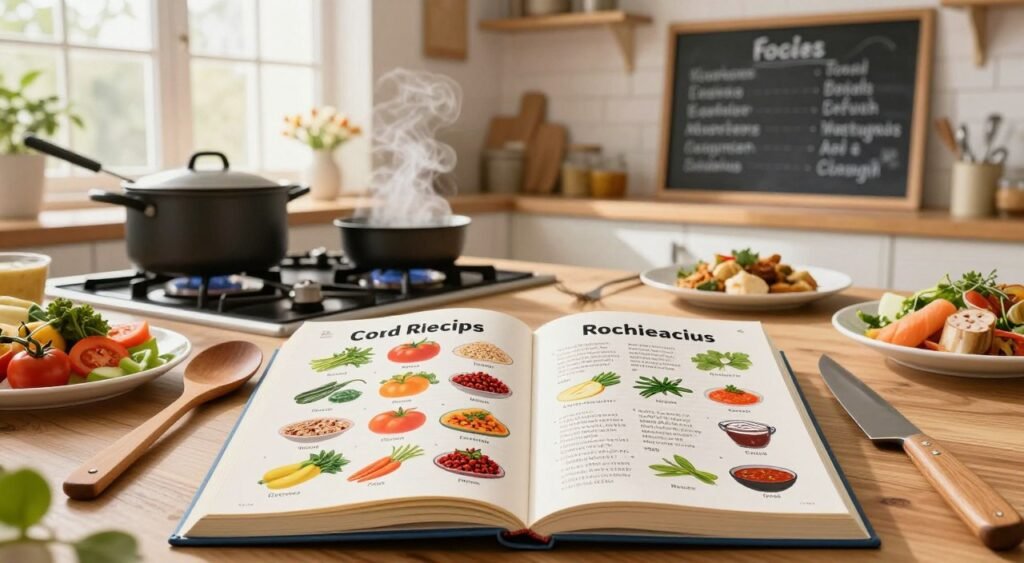
Sort items into food categories for better learning. Group ingredients by flavor, like acidic or sweet. You can also sort by where they come from or what dish they go with.
This way, you see the kitchen better. Linking a herb to a Mediterranean dish or a spice to curry helps. It makes remembering hard names easier.
Using Flashcards and Spaced Repetition Systems
Use a Spaced Repetition System (SRS) to remember terms. Tools like Anki or Quizlet help. They review terms at the right time to keep your knowledge strong.
Be consistent with these tools. Even a few minutes each day helps a lot. With daily practice, you’ll get good at culinary English fast.
Navigating the Grocery Store with Confidence
Going through a big American supermarket is more than just a list. You need to know grocery store vocabulary. Knowing what packaging terms mean helps you choose better. These grocery shopping tips will make your next trip easier.
Understanding Produce and Meat Labels
Food labels have special terms. For example, organic means no bad chemicals were used. Grass-fed meat comes from animals that ate grass, not grain.
Locally sourced food was grown close by. This reduces travel time. Knowing these food categories helps you pick better ingredients fast. See the table below for more info.
| Label Term | Definition | Best For |
|---|---|---|
| Organic | No synthetic chemicals | Produce and Dairy |
| Grass-Fed | Pasture-raised animals | Beef and Poultry |
| Non-GMO | No genetic modification | Grains and Snacks |
| Locally Sourced | Grown in the region | Seasonal Fruits |
Asking for Assistance in Specialty Aisles
It can be hard to find certain items in a big store. Don’t be shy to ask for help. Store employees are there to assist with food categories. Being clear and polite gets you the help you need fast.
Start with these simple phrases:
- «Excuse me, could you tell me which aisle I can find quinoa in?»
- «I am looking for a specific type of curry paste; do you carry it?»
- «Could you please point me toward the international foods section?»
Getting better at these interactions makes shopping easier. Use these grocery shopping tips to shop with more confidence.
Essential Cooking Verbs and Techniques
Knowing the right cooking terminology is key, whether you’re new or experienced. It helps you get the exact results you want. When you understand these instructions, you feel more confident to try new recipes.
Common Preparation Methods
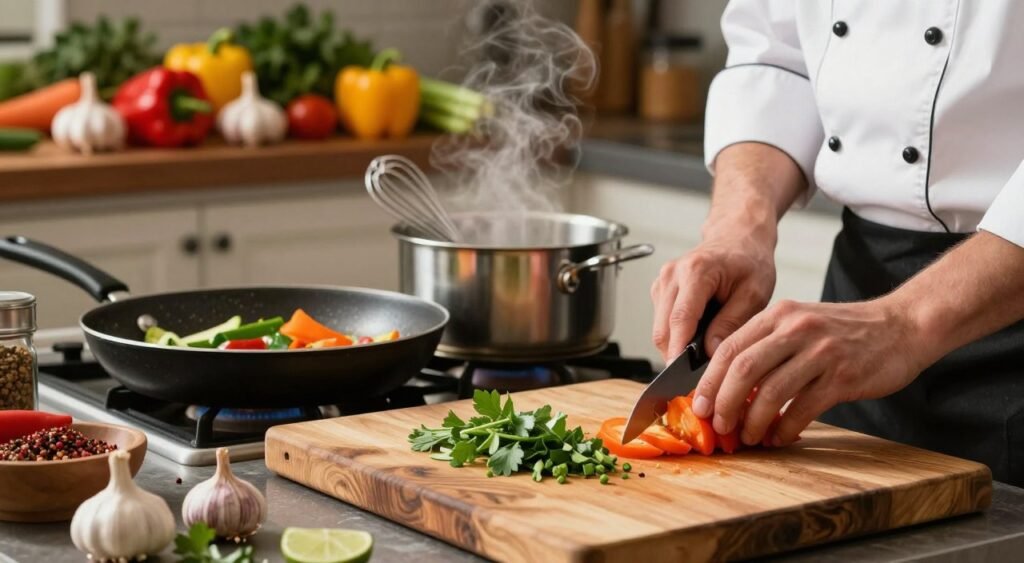
Before cooking, you need to know the basic food preparation verbs. You’ll use tools like a chef’s knife and a cutting board. The right tool makes your work safer and faster.
- Dicing: Cutting food into small, uniform cubes, usually about half an inch in size.
- Mincing: Chopping ingredients into very fine, irregular pieces, commonly used for garlic or herbs.
- Julienning: Slicing vegetables into long, thin strips that resemble matchsticks.
Heat-Based Cooking Terminology
After prepping your ingredients, you’ll use heat. Recipes tell you how long and how hot to cook. Knowing these terms helps you follow recipes and videos easily.
Differentiating Between Sautéing, Simmering, and Braising
Sautéing cooks food quickly in a bit of fat over high heat. It’s great for browning veggies or thin meat.
Simmering cooks food gently in liquid just below boiling. It’s good for cooking tough foods slowly. Braising sears food first then cooks it slowly in liquid.
Reading and Following Recipes in English
Recipes are like blueprints for the kitchen. They use shortcuts that can confuse you. Learning to read them well lets you cook any dish you want. Using good recipe reading tips helps you avoid mistakes and makes sure your food is always great.
Decoding Measurement Abbreviations
American cookbooks use special abbreviations to save space. Knowing these abbreviations is key to mastering cooking terminology. You’ll see these common measurements:
- tsp: Teaspoon
- tbsp: Tablespoon
- c: Cup
- oz: Ounce
- lb: Pound
Always check your measuring tools before starting. The wrong spoon or cup can change your dish a lot. Being precise is the key to success in cooking.
«Cooking is at once child’s play and adult joy. And cooking done with care is an act of love.»
Interpreting Instructional Language
Understanding food preparation verbs is also important. Recipes use these verbs to tell you what to do. For example, you might need to whisk eggs or fold in flour.
These verbs tell you how to mix things. If you’re not sure about a term, look it up first. Knowing these food preparation verbs makes complex recipes easy to follow.
Dining Out at American Restaurants
Understanding American restaurant menus is easy once you know how dishes are grouped. Learning dining out vocabulary helps you feel at home in new places. Knowing the menu structure means less guessing and more enjoying your meal.
Understanding Menu Sections and Descriptions
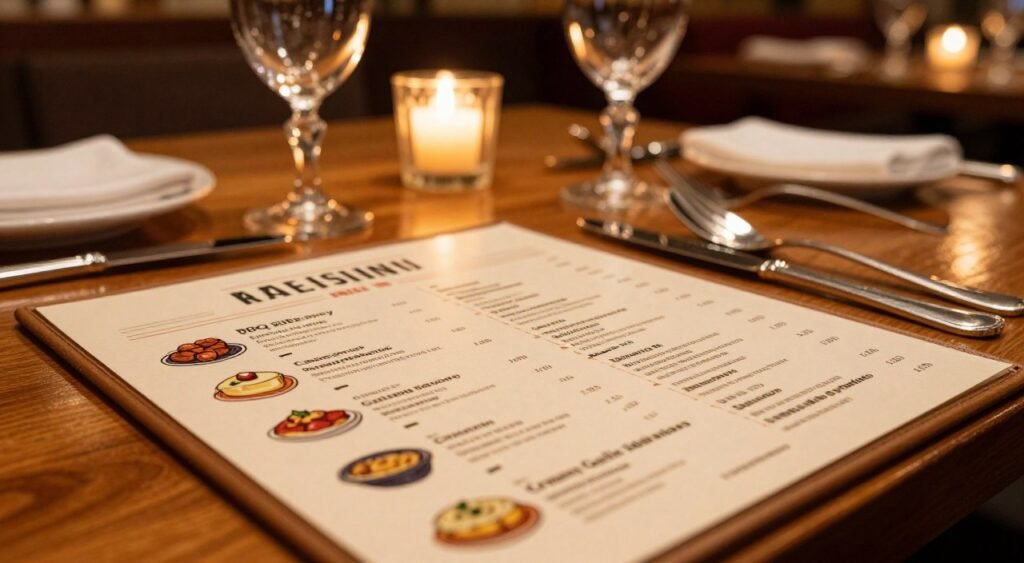
Most American menus are well-organized. They help you pick your meal quickly. Knowing these menu descriptions helps you guess what the kitchen will make.
- Appetizers: Small, shareable plates eaten before the main course.
- Entrees: The main, bigger dishes of your meal.
- Sides: Small portions of veggies, starches, or salads with your entree.
- Desserts: Sweet treats at the meal’s end.
Look closely at the adjectives in menu descriptions. Words like «seared,» «braised,» or «marinated» tell you how the dish is made. Knowing these restaurant dining phrases helps you order with confidence.
Communicating Dietary Restrictions and Preferences
Talking clearly about your health needs or food choices is key. If you’re ordering food in English, ask your server about ingredients. They can help you find tasty, safe options.
Here are simple phrases to ask for what you need:
- «I have a severe allergy to peanuts; does this dish contain any?»
- «Could you please prepare this without any dairy products?»
- «Do you have any vegetarian or vegan options available on the menu?»
- «Is it possible to have the sauce served on the side?»
Being upfront about your needs makes dining out better. Remember, being polite is important when ordering food in English. Using clear dining out vocabulary ensures your meal is just right every time.
Interacting with Restaurant Staff
Talking well with restaurant staff makes dining in the U.S. better. Knowing how to order food in English is key. But, knowing how to handle everything from start to finish makes you feel at home.
Making Reservations and Requests
When you call to book a table, say the date, time, and how many people. For example, «I’d like a table for two at 7:00 PM this Friday.» If you want a different table, ask nicely, like, «Can we have a quieter table?»
Speak slowly and make sure you agree on everything before you hang up. Clear communication helps avoid mistakes. Tell the host about special needs, like a high chair, early on.
Handling Common Dining Scenarios
During your meal, you might need to talk to the kitchen. If you want water or more napkins, just ask, «Excuse me, could I please have some more water?» Being polite and clear is important.
If you have a food allergy, tell your server right away. Say, «I have a severe nut allergy; could you please make sure my meal is safe?» Most staff are trained to handle these requests carefully.
Requesting the Check and Tipping Etiquette
When you’re ready to leave, catch your server’s eye or use a small hand signal. Ask, «Could we please have the check?» or «May I have the bill, please?» to start paying.
In the U.S., tipping is expected for good service. Aim to leave 18% to 22% of the bill before tax. Tipping shows you appreciate the service you got.
| Scenario | Suggested Phrase | Goal |
|---|---|---|
| Arrival | «I have a reservation under Smith.» | Check-in |
| Service | «Could I get some more water?» | Request |
| Departure | «Check, please.» | Payment |
Describing Flavors and Textures
Make your meals better by learning to talk about taste and texture. It’s important to say what you’re eating. This helps when you talk to chefs or share food with friends.
Adjectives for Taste Profiles
When you see menu descriptions, you find special words for flavors. Knowing these food adjectives helps you know what to expect.
Savory means a dish tastes rich and meaty. Umami is that deep, satisfying taste in mushrooms or soy sauce. A dish with a bright, citrusy taste is zesty. A sharp taste is tart.
Vocabulary for Food Consistency
The feel of food is also key. Using the right food consistency terms helps you tell different tastes apart. A soup can be creamy, and a salad crunchy.
For meats, a tender steak is tender. But an overcooked piece is tough. Knowing these words helps you give good feedback.
| Category | Descriptor | Common Example |
|---|---|---|
| Taste | Savory | Roasted Chicken |
| Taste | Tart | Green Apples |
| Texture | Creamy | Mashed Potatoes |
| Texture | Crunchy | Fresh Carrots |
Immersing Yourself in Culinary Media
Learning a new language is easy when you cook. Culinary media immersion helps you learn new words and get the feel of culinary English. Real content makes learning feel real, not just from books.
Watching English Cooking Shows and Tutorials
Choose cooking shows that fit your skill level. Start with slow YouTube tutorials for beginners. They explain cooking techniques clearly.
Then, move to fast shows like Chopped or Top Chef. You’ll hear chefs talk fast and under pressure.
Listen well to the verbs in cooking demos. Notice how chefs talk about heat, timing, and food state. This helps you learn special phrases you won’t find in dictionaries.
Reading Food Blogs and Cookbooks
Reading American food blogs and cookbooks is great. They show how language works in everyday and professional settings. You learn recipe reading tips and how to describe food in exciting ways.
When reading blogs, notice the writer’s style. Many share personal stories with recipes. This makes learning English fun and natural.
Practicing Conversational Food English
Learning to talk about food means more than just reading. It’s about doing it in real-life situations. By practicing, you’ll get better at talking about food in a fluent way.
Doing exercises regularly will make you more confident. You’ll be able to talk about menus and kitchen chats easily.

Role-Playing Restaurant Situations
Practice talking like you’re in a real restaurant. You can be both the server and the guest. This way, you learn how to make reservations and ask about specials.
It’s important to use the right dining out vocabulary. This makes your requests clear and polite. Try these common things:
- Greeting the host and confirming your reservation.
- Asking the server for recommendations based on your preferences.
- Politely signaling that you are ready to order or need more time.
- Handling unexpected issues, such as a missing utensil or a cold dish.
Discussing Favorite Dishes with Friends
When you’re comfortable with formal talks, try casual ones. Talking about food with friends is a great way to practice. Use food adjectives to make your stories vivid.
Also, practice using food consistency terms to describe textures. This makes your stories more real. Use these starters to start conversations:
- «What is the most memorable meal you have ever had?»
- «How would you describe the texture of this sauce?»
- «Do you prefer dishes that are spicy, savory, or sweet?»
- «What specific ingredients make this dish stand out to you?»
Keep practicing these topics. It will make your dining out vocabulary better. The goal is to share your thoughts clearly and enjoy talking about food.
Overcoming Common Language Barriers
Even the most experienced cooks sometimes struggle to find the right word. Whether you’re improving your English for chefs or trying a new recipe, hitting a language wall is normal. You can stay confident by having simple strategies ready for these moments.
Strategies for When You Forget a Word
Don’t panic if you forget a word. Use circumlocution instead. This means describing what you need with simpler words you know. For example, if you forget «whisk,» say «the tool used to beat eggs quickly.»
This trick is great for finding items in a new aisle. If you can’t remember the name of an herb, describe it or what dish you’ll make with it. Most staff will help you find what you need.
Clarifying Misunderstandings in the Kitchen
Good kitchen communication is key for safety and quality. If you’re unsure about an instruction, ask for clarification. Use polite, direct phrases to make sure you get it right.
Try these simple questions to check your understanding:
- «Could you please repeat that instruction?»
- «Do you mean I should dice the onions or slice them?»
- «I want to be sure I understand; should this be cooked on high or medium heat?»
By asking these questions, you show professionalism and a commitment to doing well. Remember, even native speakers ask for clarification when things are complex. Stay calm and focused to overcome any language barrier in your cooking journey.
Conclusion
Learning English for food, cooking, and restaurants is fun and rewarding. It makes you more confident when talking to others. Now, you can easily understand menus and kitchen talk.
Keep practicing every day. Watch Food Network shows or read Epicurious blogs. These activities make you better at listening and learning about American food.
Shopping for groceries is easier now. You can find fresh food and read labels at places like Whole Foods or Trader Joe’s. These small steps help you get better at speaking English.
Your hard work opens up a world of tasty adventures in the United States. Try new recipes and talk about your favorite foods. Every time you talk, you get better and connect more with local food.