
Going to stores in the United States can be tough if you don’t know the local ways. This US retail shopping guide teaches you key words to talk to staff and find what you need. Learning these words helps you do daily tasks without worry.
Talking well is important when you go to the mall or a local store. You’ll learn how to ask for help, return items, and know store rules. Mastering these phrases helps you avoid problems while shopping.
This guide is your start to being a more independent shopper. With the English Shopping Vocabulary Every Learner Should Know, you can make simple tasks easy and effective. Get ready to shop in the American market with confidence and skill.
Essential English Shopping Vocabulary Every Learner Should Know
To know how to shop in America, start with the basics. Knowing the right words is key to feeling sure in stores. This English Shopping Vocabulary Every Learner Should Know makes daily tasks easier.
In a store, you’ll hear special terms that shape your shopping. Knowing these helps you talk to staff and find what you need. These words are crucial for shopping smoothly.
Learning how to shop in America is more than just item names. You need to grasp transaction and store rules too. Here’s a table with common shopping terms you’ll hear.
| Term | Definition | Usage Context |
|---|---|---|
| Checkout | The place where you pay for items. | Finding the register. |
| Receipt | A printed proof of purchase. | Keeping records for returns. |
| Discount | A reduction in the original price. | Identifying sale items. |
| Inventory | The stock of goods available. | Checking if an item is in back. |
Practice this English Shopping Vocabulary Every Learner Should Know to get ready for any store. Soon, shopping will feel like a natural part of your day. Watch for these words on signs and in talks to get better.
Navigating Grocery Stores and Supermarkets
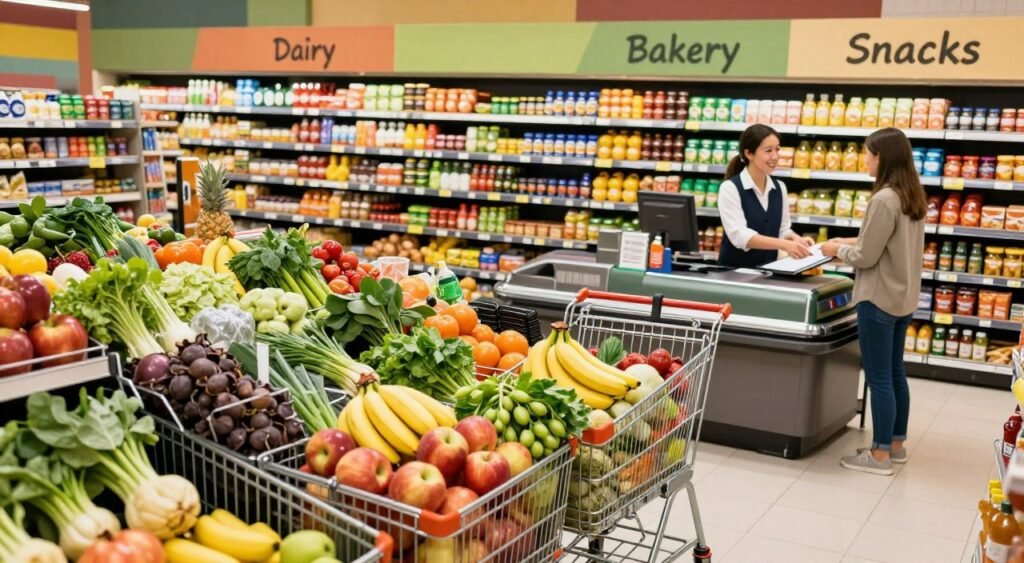
Learning grocery store terms is key for newbies in the U.S. When you enter a big supermarket, you’ll see many labels. Knowing grocery store terminology helps you shop better.
Common Produce and Dairy Terminology
The produce section is where you start. It has fresh fruits and veggies. Look for organic or locally grown items.
Know what cruciferous vegetables and stone fruits are. They’re common in American stores.
In the dairy section, you’ll find lots of choices. Learn the difference between whole milk, skim milk, and half-and-half. Stores also have plant-based milks like almond or oat milk.
Understanding Unit Pricing and Bulk Buying
Understanding unit pricing is a great skill. Look for a sticker that shows cost per ounce or pound. This helps you compare prices.
Bulk buying can save you money. Buying more items often means a lower price. Always check the tag to see if bulk is cheaper.
By understanding unit pricing, you can shop smarter. This habit helps you save money on essentials. With these tips, you’ll feel at home in any grocery store.
Mastering Clothing and Apparel Shopping
Learning about clothes shopping can make finding the right fit easy. When you go to a store in the United States, you’ll see many labels and styles. Knowing how to read clothing size charts and certain words will save you time and stress.
Decoding Size Charts and Fit Descriptions
Stores give standardized measurements to help you pick the right clothes. Always check the brand’s guide, as sizes can differ a lot. Look for «slim fit» for clothes that fit tight, or «relaxed fit» for more room.
Knowing these terms helps you buy what you want. If you like trendy clothes, look for «oversized» items. These are loose and comfy. See the table below to understand different fits better.
| Fit Type | Description | Best For |
|---|---|---|
| Slim Fit | Tailored and close to the body | Formal or modern looks |
| Regular Fit | Standard cut, not too tight | Everyday casual wear |
| Relaxed Fit | Loose and comfortable | Active or lounge wear |
| Oversized | Intentionally baggy style | Streetwear fashion |
Asking for Assistance in Fitting Rooms
After picking your clothes, you’ll go to the dressing area. Good fitting room etiquette makes your visit better. Always ask staff for different sizes or if you’re unsure about trying on many items.
When you need help, be polite. Say, «Excuse me, do you have this in a medium?» or «Could you please check if this is available in another color?». Being clear and nice helps staff help you fast, making shopping easier.
Electronics and Home Goods Retail Language
Walking into an electronics store can feel like a big challenge. There are so many technical terms. But, learning a few key phrases can make a big difference. Knowing about electronics product specifications helps you make a smart choice that fits your life.
Identifying Product Specifications and Warranties
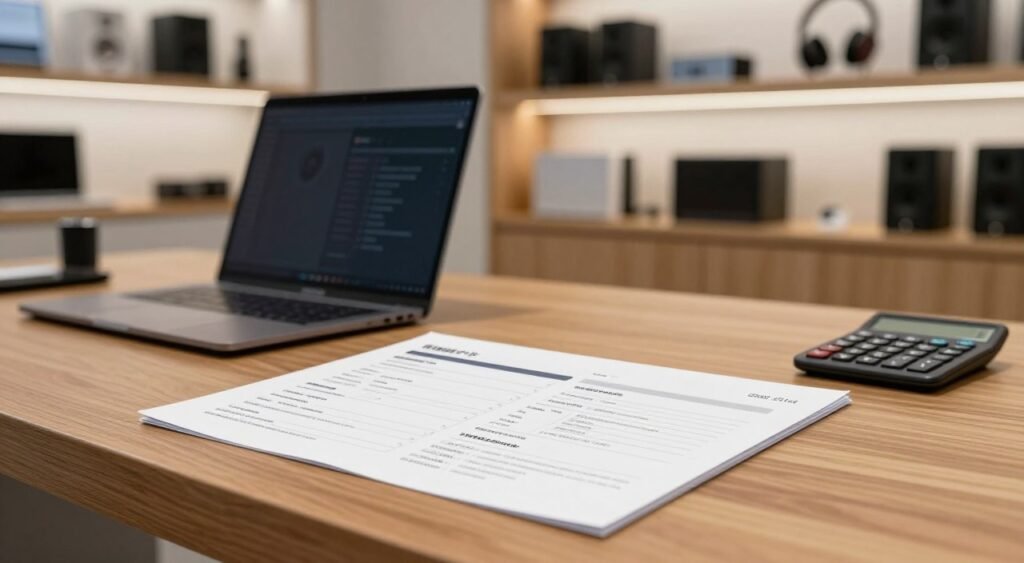
Every device has a list of technical details. Look for terms like resolution for screens, battery life for things you can carry, and compatibility for connections. These details help you see if a product is right for you before you buy it.
Also, ask about the warranty that comes with your item. A warranty usually covers defects. But, you might also want an extended protection plan for expensive items. Make sure you know if the policy covers accidents or just mechanical problems.
Comparing Features at Stores like Best Buy
Stores like Best Buy have lots of options. This makes it easy to compare different models. When looking at electronics product specifications, focus on what’s important to you. Use the table below to help you when comparing products.
| Feature Category | What to Look For | Why It Matters |
|---|---|---|
| Display | Resolution (4K vs 1080p) | Visual clarity and detail |
| Power | Battery capacity (mAh) | Usage time between charges |
| Connectivity | Ports (HDMI, USB-C) | Compatibility with devices |
| Protection | Warranty duration | Long-term repair security |
By comparing these key elements, you can find the best value. Take your time to read labels and ask questions if you’re unsure. Being informed makes shopping for home technology a success.
Online Shopping Terminology and Digital Transactions
Shopping online is different from going to stores. You need to know digital transaction terms for a good experience. Shopping from home is easy, but you must understand online shopping language.
Navigating Checkout Pages and Shipping Options
The online shopping checkout is the last step. Here, you confirm your purchase and pay. You’ll see «cart summary» and «billing address.» Make sure these match your card to avoid mistakes.
Shipping options are key. «Standard delivery» is cheap but slow. For fast delivery, look for «expedited» or «overnight» shipping. These cost more.
Understanding Promo Codes and Discount Terms
To save money, learn about discounts. A «promo code» is a special code for discounts. Always read the fine print, as codes can expire or have rules.
Knowing digital transaction terms helps during sales. For example, «BOGO» means «Buy One, Get One.» «Clearance» items can’t be returned. This knowledge helps you save.
| Term | Definition | Usage Tip |
|---|---|---|
| Expedited Shipping | Faster delivery service | Use for urgent needs |
| Promo Code | Discount voucher string | Apply before payment |
| Cart Abandonment | Leaving items in cart | Sometimes triggers coupons |
| Final Sale | No returns allowed | Check size carefully |
Handling Payments and Financial Transactions
In the United States, knowing how to pay is key. Credit and debit cards are the main payment methods in the US. Being ready at the checkout helps everyone.
Credit, Debit, and Contactless Payment Phrases
When you get to the checkout, the cashier will ask, «How will you be paying today?» You can say, «I will use my debit card» or «I’m paying with credit.» If you’re using Apple Pay or Google Pay, know the contactless payment phrases.
Ask, «Do you accept contactless payments?» if you’re not sure. Then, tap your phone or card on the reader. If it asks for a PIN, enter it on the keypad. Always wait for the beep or a green light to know your payment went through.
Requesting Receipts and Tax Information
After your payment is okayed, the clerk might ask, «Do you want a paper or digital receipt?» You can pick what you like, or say, «No receipt is needed, thank you.» If you want a paper copy, always ask for it before you leave.
Sales tax is added at the register in the US. If you’re unsure about the total, ask, «Could you explain the tax on this?» Most staff will help with the breakdown of your bill. Knowing these things makes you feel sure and in charge when you pay.
Managing Returns, Exchanges, and Store Policies
Knowing how to handle store return policies makes shopping better even when things go wrong. If an item is damaged or doesn’t fit, being ready helps you. You can handle it with confidence.
Communicating Issues with Customer Service
When you talk to a service desk, be polite yet firm. Tell them why you want to return it, like if it’s broken or you changed your mind. Keep your voice professional.
Always have your receipt or digital proof of purchase ready. This makes things faster. If you’re not sure about the store return policies, ask the person to explain them to you before you decide.
Understanding Store Credit and Refund Procedures
Retailers have specific refund procedures for getting your money back. Usually, they put the money back on your card or in your bank account.
Sometimes, you might get store credit instead of cash. This credit is like a gift card for future buys at that store. Knowing these refund procedures helps you make smart choices and protects your rights.
Seasonal Sales and Holiday Shopping Vocabulary
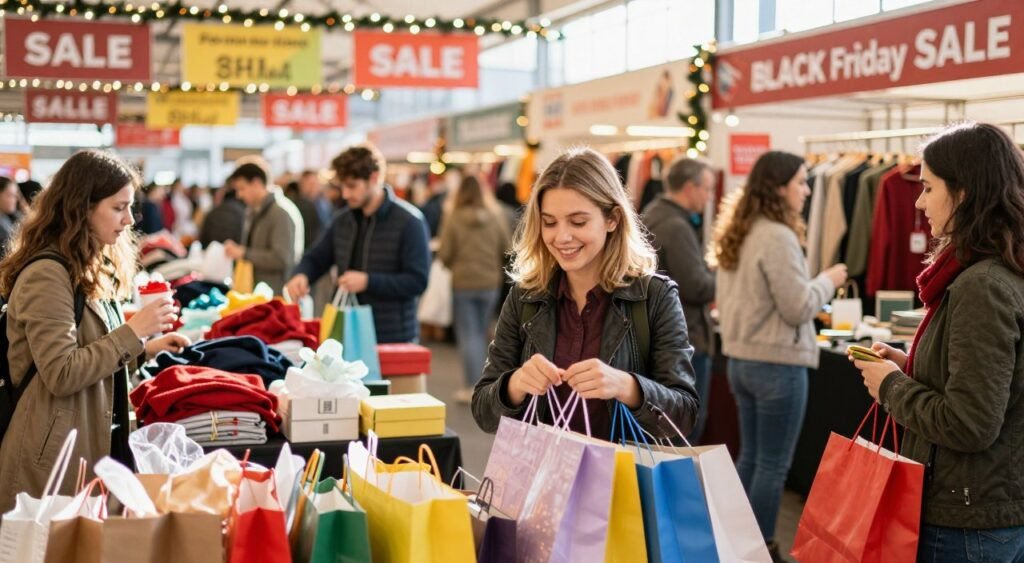
From clearance racks to big holiday events, knowing the right words is key. The American retail calendar has big events that need a special seasonal sales vocabulary. Learning these terms helps you find real discounts and avoid traps during busy times.
Identifying Clearance and Door-Buster Deals
Retailers use special words for deep discounts. Knowing these terms helps you know a real bargain from a regular sale.
- Clearance: Items that are being permanently marked down to clear inventory, often because they are out of season or discontinued.
- Door-Buster: A heavily discounted item offered in limited quantities to attract customers to a store early in the morning.
- Final Sale: A purchase that cannot be returned or exchanged, usually applied to items with the deepest discounts.
When you see a door-buster sign, expect lots of competition. These deals are meant to make you act fast, before the product is gone.
Navigating Black Friday and Cyber Monday Sales
The days after Thanksgiving are the busiest shopping time in the U.S. Good Black Friday shopping tips help you stay on track in crowded stores or online.
Cyber Monday is all about online deals. To get the most out of these days, remember these tips:
- Compare Prices: Use browser extensions to track price history and ensure the discount is legitimate.
- Create a Wishlist: Prepare your list in advance to avoid impulse buying during the rush.
- Check Store Policies: Review return rules before you click «buy,» as holiday policies can differ from standard ones.
Knowing this seasonal sales vocabulary helps you control your budget. With these Black Friday shopping tips, you can make a stressful day into a good one.
Cultural Nuances of Customer Service in the US
When you shop in the United States, you’ll see that customer service is friendly. This US retail shopping guide shows that staff wants to connect with you. Knowing this makes shopping easier and more fun.
Polite Phrases for Interacting with Staff
Using the right retail customer service phrases makes shopping better. Say «Excuse me, could you help me find…» to be polite. It shows you respect their time and need help.
When you’re happy with help, say «Thank you so much for your help, I really appreciate it.» It helps build a good relationship. Being polite and friendly makes staff want to help more.
Tipping Etiquette in Retail and Service Contexts
Tipping is not needed for most retail, but it’s important for some services. Knowing tipping etiquette is key for services like personal shoppers or delivery.
For delivery, tip 15% to 20% of the total. If a personal shopper helps, a small tip is nice. Always check if a service fee is included before tipping.
Common Shopping Abbreviations and Acronyms
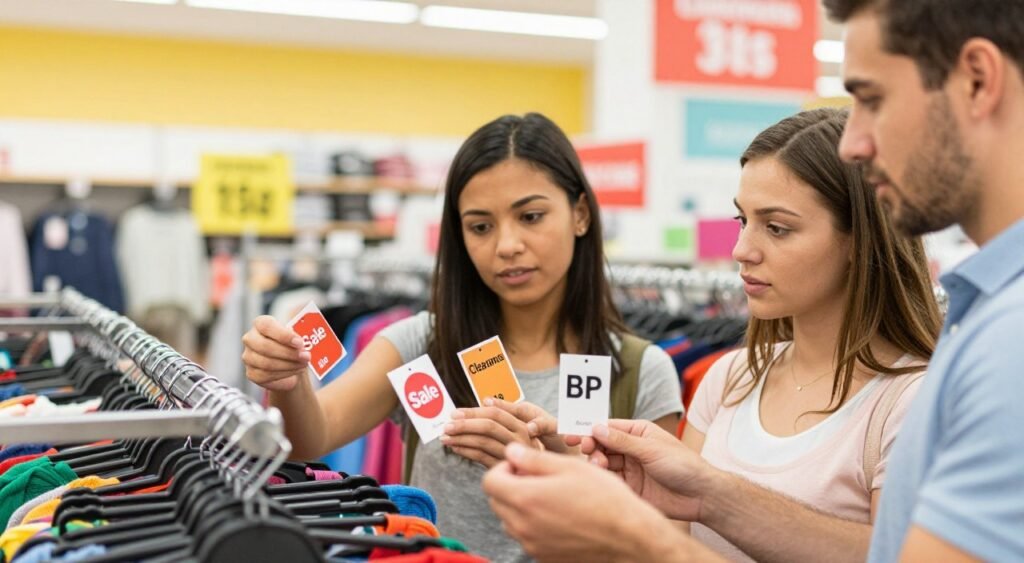
Ever looked at a price tag and wondered what the letters mean? Stores use short codes to save space. Deciphering price tags helps you shop smarter.
Deciphering Price Tags and Store Signage
MSRP means Manufacturer’s Suggested Retail Price. It shows the item’s value before discounts. BOGO means «Buy One, Get One,» a common sale.
OOS on a tag means the item is «Out of Stock.» Knowing these codes saves time. It helps you know if your favorite items are available.
Understanding Common Retail Abbreviations
Learning retail abbreviations makes shopping easier. Here’s a quick guide for common terms in American stores.
| Abbreviation | Full Meaning | Context |
|---|---|---|
| MSRP | Manufacturer’s Suggested Retail Price | Pricing |
| BOGO | Buy One, Get One | Promotions |
| OOS | Out of Stock | Inventory |
| SKU | Stock Keeping Unit | Tracking |
Remember this guide for your next shopping trip. Mastering these terms lets you grab deals quickly. Shopping will be more efficient once you know the store’s language.
Conclusion
You now know how to shop in America with confidence. Whether at Walmart or a boutique, you can talk to people easily. This makes every shopping trip a success.
Using these words often helps you get better. Try them out next time you go shopping. You’ll feel more comfortable talking to people and handling money.
Keep this guide handy as you learn more English. The best way to get better is by practicing. Tell your friends about your shopping adventures or join a language group.
Learning these details makes shopping in America easier. Stay curious and keep improving your English. You’ll have an easier time shopping every time.